Top Preschool in Hyderabad offers significant benefits for social and cognitive growth if the child shows readiness signs like curiosity about peers or simple independence. Many experts recommend starting around age 2 in a play-based Preschool environment to build foundational skills .
In this blog, we’ll look at
- what research says,
- the real benefits and risks, and
- a simple checklist to help you decide calmly, not out of fear.
1. What Can a 2‑Year‑Old Actually Do At Top Preschool ?
By 2 years, most kids are:
- Socially curious – They start watching other children, copying actions, and slowly learning to share.
- Emotionally intense – Tantrums, “I do it myself” phases, and big feelings are normal – it means their brain is growing fast.
- Language learners – They understand more than they can say, and they pick up words quickly from parents, caregivers, and other kids.
Preschool at this age is not about forcing them to “behave” or “learn ABCs early.”
It’s about using play and simple routines to support what they’re already doing naturally.
2. How can Top Preschool Helps (The “Yes” Side)
If the environment is warm, gentle, and play‑based, Top preschool in Hyderabad can help :
A) Social & Emotional Growth
- Kids learn to take turns, share, and wait their chance.
- They learn to name feelings like happy, sad, angry with simple guidance.
- They practice being away from parents in a safe, predictable space –Top preschool which builds confidence for Your child.
B) Learning & Language
- Stories, songs, and conversations every day boost vocabulary and language skills atop preschool Curriculum.
- Simple activities like sorting, matching, and counting blocks build early thinking and pre‑math skills without pressure.
C) Motor & Sensory Skills
- Running, climbing, dancing, and obstacle play help gross motor development (big‑body movements).
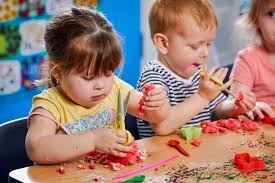
- Painting, threading beads, stacking blocks, and play‑dough help fine motor skills and hand control.
D) Independence & Routine
- Simple routines (circle time, snack time, washroom time) give kids a sense of order and independence.
- Small choices (“Which toy?” / “Which corner?”) help them feel in control, not overwhelmed.
3. When It’s Not “Necessary” (The “No” Side)
Experts also say: preschool is not compulsory at 2.
For some children, staying home with a loving caregiver can be just as good – or even better.
A) Home can be enough
- If your child gets quality time, play, and conversation at home, they can grow well without a preschool.
- Some kids need more one‑on‑one attention, slower pace, or a quieter environment than a group class can give.
B) Wrong fit = stress
- If the preschool is too strict, too academic, or understaffed, it can:
- make the child afraid of school or learning.
- increase anxiety, tantrums, or clinginess.
C) Readiness matters
At 2, many kids are still learning:
- basic potty habits,
- nap routines,
- and how to handle short separations from parents.
If your child is very sensitive, anxious, or not ready to be away from you yet, many experts suggest waiting closer to 3 years instead of forcing an early start.
4. Quick Readiness Check (For Parents)
Ask yourself honestly (no pressure, no judgment):
- Does your child show interest in other kids (even if it’s just watching them)?
- Can they follow simple instructions like “Bring the toy here” or “Put shoes on”?
- Are they okay being away from you for 1–2 hours with a trusted adult?
- Do you want social exposure, routine, and learning support, or are you mainly worried about “not falling behind”?
If the answers are mostly “yes” and “we want support”, a gentle, play‑based preschool can be a good option.
If the answers are more “no” or “we’re comfortable at home”, then staying home with quality play and interaction is a perfectly healthy choice.
5. How to Choose the Right Top Preschool in Hyderabad for a 2‑Year‑Old
If you decide to join in Top preschool i Hyderabad , focus on these points instead of brand names:
- Small group size – More teachers per child means more attention and care.
- Play based learning – Look for lots of songs, stories, sensory play, free play, and outdoor time, not worksheets or “tests.”
- Social‑emotional focus – Do teachers talk about feelings and help kids solve small fights?
- Flexible start – Many good schools offer:
- trial days,
- short initial sessions,
- and parent stay‑back options.
These are signs that the school really understands 2‑year‑olds’ needs.
6. Conclusion
So, is preschool necessary for a 2‑year‑old?
- No, it’s not compulsory.
- Yes, it can be very helpful if the environment is warm, gentle, and suitable for your child.
- If your child is curious, reasonably calm, and your family wants social exposure and routine, a play‑based preschool can support their growth.
- If your child is very sensitive, strongly attached, or your home already offers rich interaction and play, a slower, later start is also completely okay.